
It's not that complicated
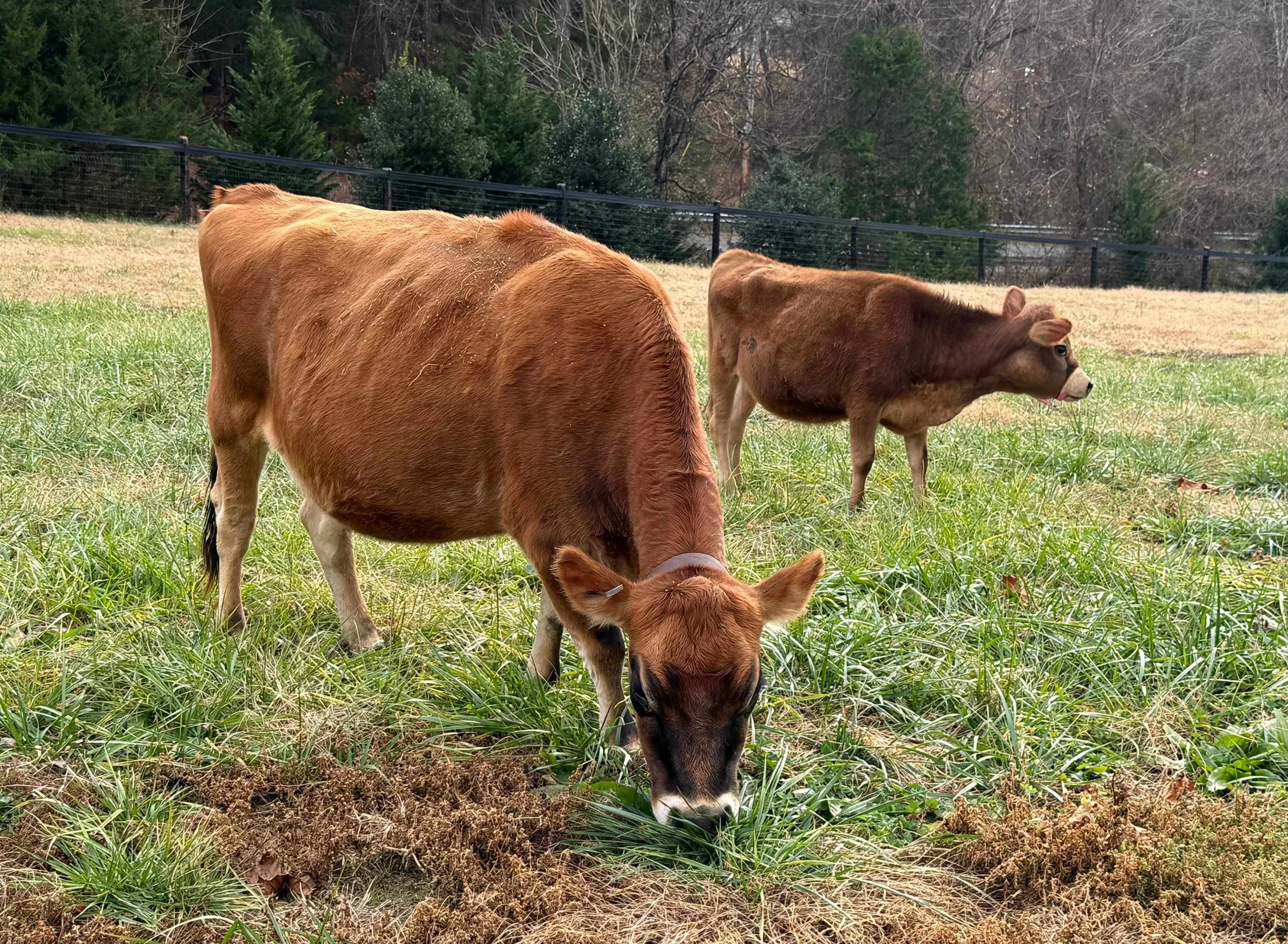
The benefits of Raw cow’s milk
Research consistently shows that children who consume raw or minimally processed cow’s milk early in life tend to have lower rates of asthma, wheeze, allergic rhinitis, colitis, and atopic sensitization, especially among farm communities. This interesting connection is often called the “farm milk effect.” This in itself is a reason to raise those kids and grandkids on a farm!
But the research on the health benefits of raw milk is impressive if one digs deep into the peer-reviewed literature.
Larger studies found that kids who drank unprocessed farm milk had much lower odds of developing asthma, allergies, and colitis than those who drank processed milk, even after accounting for other factors (1-5). A thorough review and meta-analysis by Brick et al. (6) highlights that drinking raw milk early in life is associated with a lower risk of asthma and allergies. How could any government not want to investigate this further and work to determine whether the risk/benefit ratio of drinking raw may have shifted?
Mechanistically, several peer-reviewed studies propose that heat-sensitive bioactive components may contribute to these associations. These beneficial components include immunoglobulins, lactoferrin, lactoperoxidase, transforming growth factor-β, and other proteins that can be partially denatured by pasteurization, particularly at higher temperatures or longer processing times (7, 8). Experimental work suggests that these components may influence immune maturation and tolerance, especially during early life.
In the United States, childhood asthma and allergic diseases have become common chronic conditions, affecting a significant portion of the pediatric population. Recent national surveillance data from the CDC show that more than one in four children has at least one allergic condition, including seasonal allergic rhinitis, eczema, or food allergy (9). Asthma remains one of the most widespread chronic childhood diseases, impacting approximately 8 to 10% of U.S. children, with rates varying by age, race, and socioeconomic status (10). Over recent decades, the prevalence of allergic diseases, especially food allergies and eczema, has increased substantially, a trend confirmed by multiple analyses of the National Health Interview Survey (11). Notably, the prevalence of food allergies among U.S. children has risen by about 50% since the late 1990s, reflecting a broader increase in atopic diseases during this time (12, 13). Approximately 3,500 people die from asthma each year, and millions are debilitated, with around 350,000 hospitalizations annually. If these numbers could be reduced by drinking raw milk, wouldn’t that be worth investigating?
Raw milk also differs from pasteurized milk in its microbial complexity, containing a broader and more diverse bacterial community. Reviews of dairy microbiology note that raw milk microbiota can influence immune signaling and gut microbial exposure, which has been proposed as another pathway for immune modulation (14). Human observational studies examining traditional or unpasteurized dairy consumption have reported differences in gut microbiome composition, though these studies typically involve complex dietary patterns rather than raw milk alone (15).
It is true that, from a macro-nutritional standpoint, peer-reviewed summary literature indicates that nutrient content and most vitamins and minerals are broadly similar between raw and pasteurized milk, with only modest reductions in certain heat-sensitive vitamins depending on processing conditions. A systematic review by MacDonald et al. and a comprehensive review by Claeys et al. found that pasteurization has minimal impact on overall nutritional value, suggesting that any reported benefits of raw milk are more likely related to bioactivity and immune effects rather than major nutrient differences (7, 16). Because the macronutritional differences between pasteurized and raw milk are minimal, proponents of pasteurization ignore that raw milk contains micronutrients that are more complex and biologically active, including immunoglobulins, lactoferrin, lactoperoxidase (an enzyme), transforming growth factor-β, and other proteins that can be partially denatured by pasteurization.
The government likes to cite outbreak statistics showing that unpasteurized milk and dairy cause disproportionately more disease. There is truth to this. But that is not the whole story. Unfortunately, the government doesn’t seem interested in doing the actual risk/benefit analysis. What is the morbidity and mortality associated with drinking raw milk versus the consequent reduced risk, reduced morbidity, and mortality of asthma and allergic diseases from long-term raw milk consumption in children and maybe even adults?
A brief risk analysis of raw milk consumption indicates that the risk of illness from drinking milk is very low. The average annual illness count reported in CDC data is 761 cases linked to unpasteurized milk and cheese. Based on an estimated 10.7 million regular raw milk consumers in the United States, this corresponds to roughly 7 cases per 100,000 consumers (approximately 0.007 percent).
We queried Chat-GPT 5.2 to produce a full benefit/risk analysis regarding regular raw milk consumption by children. The results are summarized below:
Epidemiologic studies consistently report that early childhood consumption of raw or minimally processed cow’s milk is associated with substantially lower odds of asthma, wheeze, allergic rhinitis, and atopic sensitization, with pooled estimates suggesting a 30 to 40% reduction in risk.
When translated to U.S. baseline prevalences, this association corresponds to thousands fewer cases of chronic allergic disease per 100,000 exposed children, conditions that often persist for years and carry long-term quality-of-life and healthcare burdens.
In contrast, the documented risks of raw milk consumption are concentrated in short-term foodborne illness, with population-level estimates indicating 760 cases of mostly self-limited gastrointestinal infections annually for the entire United States, a small number of hospitalizations, and rare severe sequelae.
Framed quantitatively, the potential benefit of reduced allergic disease affects orders of magnitude more children than the number experiencing serious adverse outcomes, although the benefit remains observational and causality cannot be definitively established.
The risk–benefit balance, therefore, hinges less on the existence of risk than on how low-probability acute harms are weighed against higher-probability reductions in chronic disease, as well as on confidence in production quality and handling practices.
One has to wonder what all the fuss is about.
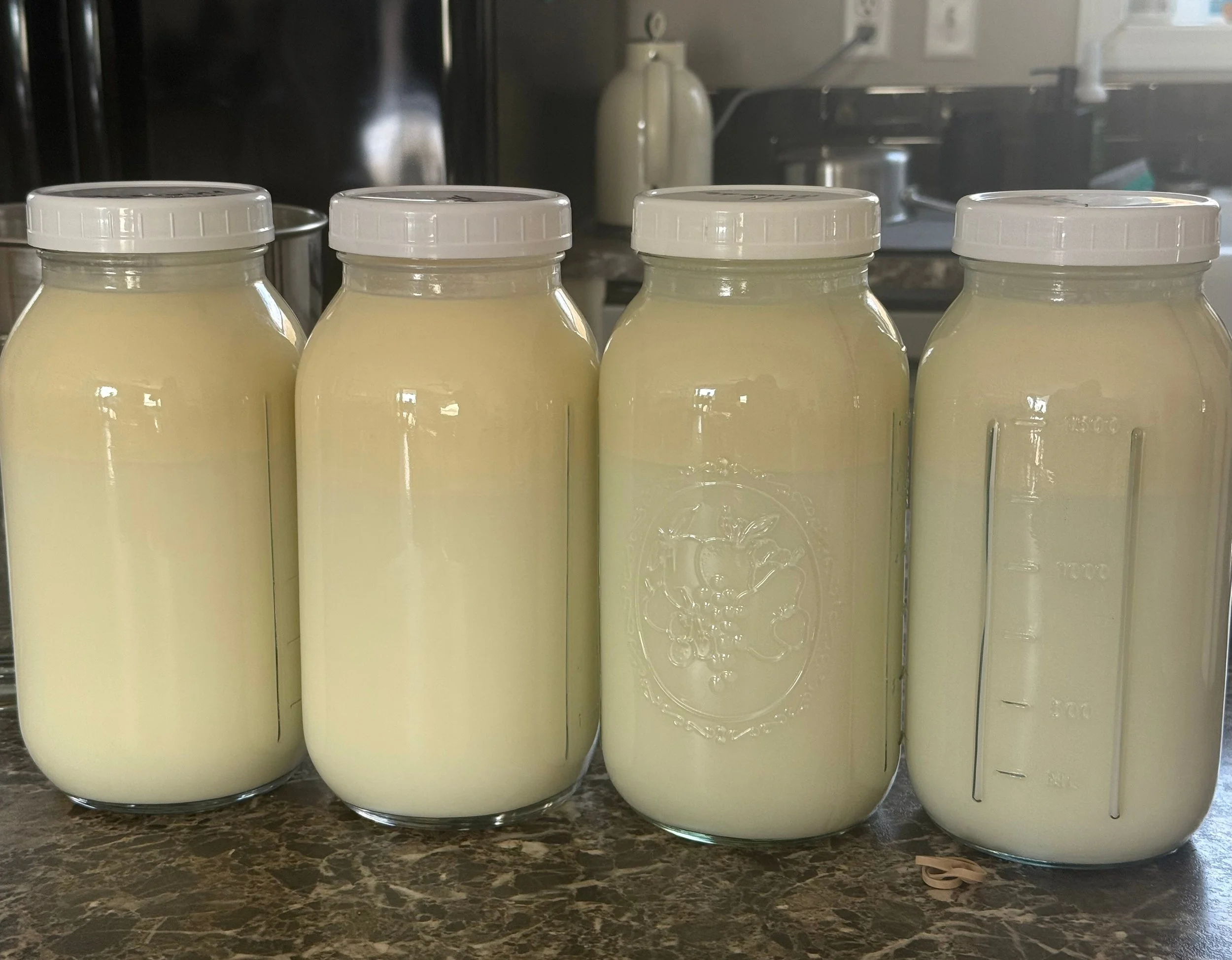
“About Raw Milk?”
We get asked this question fairly frequently: “About raw milk, is it safe, do you… drink it?” The answer is, yes, we drink it.
In the United States, raw milk is not produced by large commercial dairy farms. It is sold locally, in part because federal regulations prohibit the transportation of raw milk across state lines. As a result, purchasing raw milk supports local farmers and local economies.
Pasteurized milk is promoted by the federal government as being much safer to drink, with claims that raw milk causes significant disease and death. The CDC maintains numerous webpages warning about the dangers of raw milk. However, because of state authority, raw milk is legal for sale in some form in approximately 29 states. What the federal government can legally prohibit is the interstate transport and sale of raw milk; restrictions that disproportionately benefit large milk producers.
According to a 2022 Congressional report, while many companies operate in the U.S. dairy processing sector, a relatively small group of large cooperatives and corporate processors handles most of the pasteurized milk sold nationwide. Cooperatives alone control approximately 87% of total U.S. milk and milk product processing and distribution. Within this cooperative-led market and the broader processor landscape; large corporate firms, including Dairy Farmers of America, Saputo, Nestlé, Danone, and Lactalis, dominate sales.
As with many large agricultural sectors, a strict regulatory environment prevents small farmers from competing directly with large cooperatives and national dairy firms that retail pasteurized products. The sale of raw milk directly challenges regulations built around the pasteurization model.
We live in a state that doesn’t allow direct farmer-to-consumer sales of raw milk. So workarounds have been developed. We obtain our raw milk through a herd-share program, which in Virginia requires consumers to own a share of a cow in order to receive raw milk. Typically, one share, costing about fifty dollars upfront, entitles the owner to half a gallon of milk per week. We have purchased four shares from a local farmer, who provides us with 2 gallons weekly, and we pay for these shares by “boarding” the cow through a monthly service fee. The service fee works out to about 12 bucks per half-gallon. Yep -that boutique, hand-produced product is expensive, but it is worth every penny. The taste alone is out of this world, and then there are the clear health benefits, particularly for Robert, who has significant allergies and some asthma. Raw milk is one of the mainstays of our diet.
The farmer we buy from has about five dairy cows and manages every aspect of the operation, including pasture management, husbandry, milking, and milk handling. Once a week, we provide clean mason jars, which she fills and stores in a refrigerator on her porch for pickup on a designated day. Previously, we participated in a milk share with a farmer who operated a dedicated dairy shed and sold other dairy products, as well as homemade skincare and cosmetics. Running a raw-milk operation requires significant commitment and an entrepreneurial mindset in the best sense of the word. These farmers resemble the traditional farmers of earlier generations, and they deserve considerable respect.
In the past, we have also kept miniature Jersey dairy cattle for our own needs, we shared responsibility for the milking, and Jill handled the processing herself, which is a time-consuming job. When we milked our own cows, the calves were weaned according to a standard protocol, and although we only milked once a day, we ended up with way too much milk. Jill ended up spending a considerable amount of time just trying to use up the excess milk!
With the current cows, the goal is to produce less milk. We will also be leaving the calves on the cows for an extended period of time. With this protocol, the calf will be separated for about an hour just prior to milking. That way, we will only be milking a small fraction of what the cow produces. We also will find a person who would like to share in the labor in exchange for raw milk. Finding the right individual is key, as we are very picky about who comes onto our farm and handles our animals. Frankly, just finding someone who is willing to show up can be difficult. Milking cattle sounds so romantic, but the reality is that a lot of muck and cow manure are involved… as well as a lot of sanitizing and clean up.
The legality of raw milk varies widely by state, with different rules governing retail sales, on-farm sales, off-farm sales, and herd-share arrangements. In total, 29 states allow some form of raw milk sales, though conditions vary substantially. Eight states: California, Maine, New Hampshire, New Mexico, Pennsylvania, South Carolina, Utah, and Washington allow unrestricted raw milk sales. An additional 13 states permit retail sales under various regulatory requirements, including licensing or restrictions to specific venues, such as farms or farmers’ markets. Other states will allow sales for pet milk. Milk share programs exist in states like Virginia, which does not allow raw milk sales.
For those considering raw milk, it is important to visit the farm and understand sanitation practices. When farms maintain healthy animals, clean facilities, properly disinfect udders, sanitize milking equipment, and conduct routine testing, the risk of contamination from pathogens is minimal. In practice, bovine tuberculosis has not been a significant issue for many years and represented a minority of tuberculosis cases historically. Human tuberculosis was not spread through cattle or contracted through dairy products. This is yet another false narrative.
Common sense appears to be lacking in many state governments, namely, the 21 states that have outlawed raw milk sales altogether. It also appears lacking at the federal level, particularly in outdated interstate transport laws and the fear-based messaging and behavioral nudges found on CDC webpages, which still exist today.
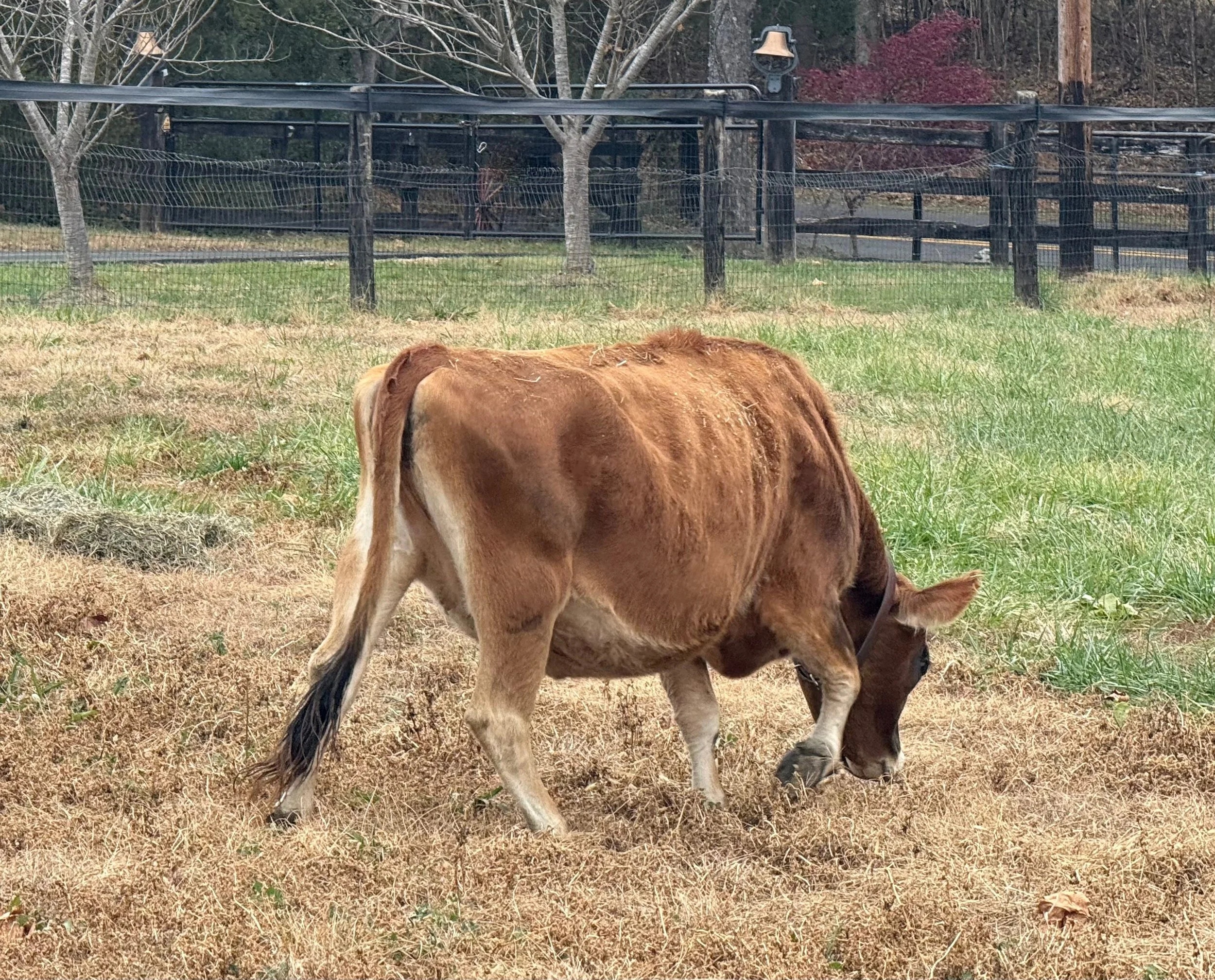
Jersey milk versus raw milk
Milk tolerance is often discussed as if it were a single issue, but the evidence makes clear that breed, protein genetics, and processing are three separate variables, each acting through different biological mechanisms.
First, it is important to note that across controlled studies, most people with digestive upsets from milk are not lactose intolerant. In fact, only about one-third of those who say they “can’t tolerate dairy” actually have measurable lactose malabsorption when tested; for the remaining two-thirds, other issues are involved.
With that in mind, drinking milk from Jersey cattle may help resolve digestive intolerance to dairy for many people. Jersey cows matter not because they are far more likely than Holsteins, which are the predominant commercial dairy breed, to carry the A2/A2 beta-casein genotype, and they produce milk with higher fat and protein content. The A1 versus A2 distinction is the clearest variable supported by controlled human clinical trials in providing relief from the gastrointestinal effects associated with consuming dairy. The A1 and A2 beta-casein (a protein) molecules differ by a single amino acid, yet that difference alters digestion. During digestion, A1 beta-casein can release bioactive peptides, including BCM-7, which have opioid-like effects on gut motility and signaling (slowing down gut peristalsis) in susceptible individuals. Multiple randomized and crossover studies report that milk containing A1 beta-casein is associated with more abdominal pain, bloating, altered stool patterns, and slower intestinal transit in some adults, even when lactose content is identical. A2 milk, whether raw or pasteurized, is associated with fewer gastrointestinal symptoms in these populations. Importantly, this effect is independent of lactose and independent of pasteurization. Of note, A1/A2 cows produce mixed milk, one gene is not dominant over the other, so A1/A2 behaves more like conventional milk in digestion studies. What drinking Jersey milk does not change is the lactose concentration in milk.
About 70 percent of Jersey cattle test A2/A2,
Guernseys typically have a very high A2/A2 frequency (~85–90% or more).
Modern Holsteins show more mixed results, with A2/A2 frequencies historically lower but increasing under selective breeding.
So, if you’re thinking of investing in a couple of cows, or if you are investing in a herd share program, getting an analysis of the milk’s beta-casein genotype is important. Both for the digestibility of the milk and for the resale value of the animals or their offspring.
Raw versus pasteurized milk is an entirely separate issue. Pasteurization alters protein structure and inactivates native enzymes, but it does not change lactose content or the beta-casein protein amino acid sequence. Human crossover trials studying lactose digestion show that raw milk does not significantly reduce lactose malabsorption or typical lactose intolerance symptoms compared to pasteurized milk. This challenges the common claim that raw milk “fixes” lactose intolerance. But these studies used subjects that were truly lactose intolerant, which is only a third of the people who can’t consume dairy.
That said, most individuals report huge differences in their symptoms between raw and pasteurized milk that persist even when lactose-free products do not help. These effects, where they exist, are more plausibly linked to fat-globule structure, minor proteins, or enzyme activity rather than lactose or A1/A2 genetics. Unfortunately, there have not been any studies of significance documenting this one way or the other. As most people who can’t digest milk aren’t actually lactose intolerant, the raw versus pasteurized would not be dependent on lactose. For Jill and me, raw milk seems more important than the A1/A2 gene issue, but that may not be the case for everyone.
Wrapping up the raw milk story
Taken together, the evidence and experience outlined here suggest that raw cow’s milk should be considered an alternative to conventional milk. Large epidemiologic studies consistently associate early-life consumption of raw or minimally processed milk with substantially lower rates of asthma and allergic disease, effects that plausibly relate to heat-sensitive bioactive components and microbial complexity rather than macronutrient differences. At the same time (as discussed above), the documented risks of raw milk are largely confined to relatively rare, usually short-term foodborne illnesses, particularly when production and handling are poorly managed. When these risks are weighed against the high prevalence, chronicity, and long-term burden of asthma and allergic disease, the potential benefits affect orders of magnitude more people than those experiencing serious adverse outcomes, even while acknowledging that causality has not been definitively proven.
Beyond health outcomes, raw milk production and consumption also connect with issues of local agriculture, regulatory fairness, and consumer choice. Current U.S. policies heavily favor large-scale pasteurized dairy systems. This limits small farmers and restricts opportunities to larger-scale operations.
In sum, the question is not whether raw milk carries any risk; it does, but that risk can be reduced through good animal hygiene and processing techniques. Instead, the real question is whether those risks are justified by the restrictions placed on it, considering the potential for significant reductions in common chronic diseases and the proven ability of careful, small-scale producers to ensure safety.
Full-fat milk is healthy
Do not fall for the hype about low-fat and no-fat milk being better for you or your family. First off, the fat in whole milk slows digestion and helps keep blood sugar levels more stable after eating. This can reduce hunger between meals and may help prevent overeating compared to low-fat or fat-free dairy.
Full-fat milk contains beneficial fatty acids, including conjugated linoleic acid (CLA) – studied for potential anti-inflammatory and anti-cancer effects. Omega-3 fatty acids (especially in grass-fed milk) – support cardiovascular and brain health. Short- and medium-chain fats (like butyric acid) – can support gut health and metabolism.
The vitamins A, D, E, and K require fat for absorption, and full-fat milk is perfect for that. Skim and low-fat milks remove most of the fat, which can reduce uptake unless the milk is fortified. Remember that maintaining adequate vitamin D levels is a critical component of building a healthy immune system.
Contrary to old assumptions, many large studies (e.g., American Journal of Clinical Nutrition, Lancet, European Journal of Epidemiology) show that full-fat dairy does not increase cardiovascular disease risk and is heart-healthy when replacing refined carbohydrates.
Cholesterol and saturated fat in milk are structural components of cell membranes and hormones; these are especially important for children’s brain development, cognition, and reproductive health, including hormonal regulation, in adults.
Now, the big food industry that manufactures fake foods has made a vast fortune selling Americans on the benefits of a low-fat diet. The truth is that Americans have only gotten fatter as they buy high-priced, artificially processed foods that turn wholesome, whole foods into frankenfoods. Just stop buying into the hype.
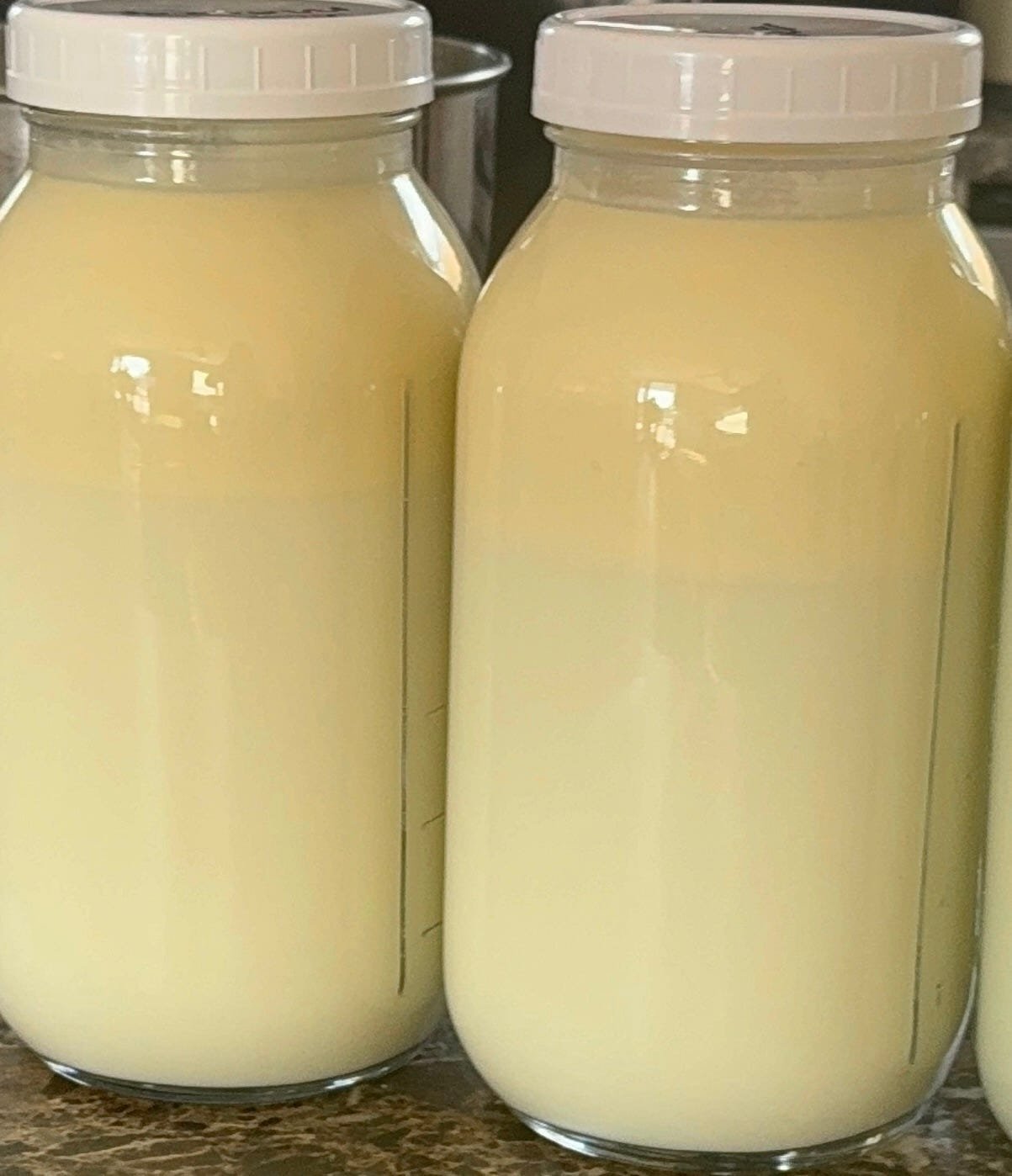
Jersey milk can have twice the fat as whole milk bought from a grocery. Perfect for butter making!
JGM
References;
1. Frei R, Ferstl R, Roduit C, Ziegler M, Schiavi E, Barcik W, et al. Exposure to nonmicrobial N-glycolylneuraminic acid protects farmers’ children against airway inflammation and colitis. J Allergy Clin Immunol. 2018;141(1):382–90 e7.
2. Frei R, Heye K, Roduit C. Environmental influences on childhood allergies and asthma - The Farm effect. Pediatr Allergy Immunol. 2022;33(6):e13807.
3. Lluis A, Depner M, Gaugler B, Saas P, Casaca VI, Raedler D, et al. Increased regulatory T-cell numbers are associated with farm milk exposure and lower atopic sensitization and asthma in childhood. J Allergy Clin Immunol. 2014;133(2):551–9.
4. Riedler J, Braun-Fahrlander C, Eder W, Schreuer M, Waser M, Maisch S, et al. Exposure to farming in early life and development of asthma and allergy: a cross-sectional survey. Lancet. 2001;358(9288):1129–33.
5. Waser M, Michels KB, Bieli C, Floistrup H, Pershagen G, von Mutius E, et al. Inverse association of farm milk consumption with asthma and allergy in rural and suburban populations across Europe. Clin Exp Allergy. 2007;37(5):661–70.
6. Brick T, Schober Y, Bocking C, Pekkanen J, Genuneit J, Loss G, et al. omega-3 fatty acids contribute to the asthma-protective effect of unprocessed cow’s milk. J Allergy Clin Immunol. 2016;137(6):1699–706 e13.
7. Claeys WL, Cardoen S, Daube G, De Block J, Dewettinck K, Dierick K, et al. Raw or heated cow milk consumption: Review of risks and benefits. . Food Control. 2013;3(1):251–62.
8. van Neerven RJ, Knol EF, Heck JM, Savelkoul HF. Which factors in raw cow’s milk contribute to protection against allergies? J Allergy Clin Immunol. 2012;130(4):853–8.
9. Staff C. Summary Health Statistics for U.S. Children: National Health Interview Survey, 2021. In: National Center for Health Statistics C, editor. 2022.
10. Staff C. Most Recent National Asthma Data. In: National Center for Health Statistics CfDCaPC, editor. Atlanta, GA: CDC; 2023.
11. Jackson KD, Howie LD, Akinbami LJ. Trends in allergic conditions among children: United States, 1997-2011. NCHS Data Brief. 2013(121):1–8.
12. Gupta RS, Springston EE, Warrier MR, Smith B, Kumar R, Pongracic J, et al. The prevalence, severity, and distribution of childhood food allergy in the United States. Pediatrics. 2011;128(1):e9–17.
13. Sicherer SH, Sampson HA. Food allergy: Epidemiology, pathogenesis, diagnosis, and treatment. J Allergy Clin Immunol. 2014;133(2):291–307; quiz 8.
14. Quigley L, McCarthy R, O’Sullivan O, Beresford TP, Fitzgerald GF, Ross RP, et al. The microbial content of raw and pasteurized cow milk as determined by molecular approaches. J Dairy Sci. 2013;96(8):4928–37.
15. Parente E, Zotta T, Faust K, De Filippis F, Ercolini D. Structure of association networks in food bacterial communities. Food Microbiol. 2018;73:49–60.
16. Macdonald LE, Brett J, Kelton D, Majowicz SE, Snedeker K, Sargeant JM. A systematic review and meta-analysis of the effects of pasteurization on milk vitamins, and evidence for raw milk consumption and other health-related outcomes. J Food Prot. 2011;74(11):1814–32.