
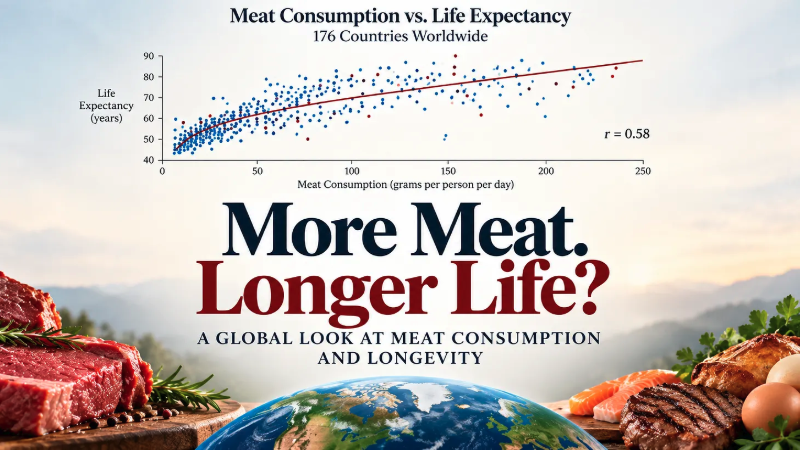
Does Eating Less Meat Make You Live Longer?
By: Dr.s Jill Glasspool Malone and Robert W. Malone
On October 8, The Washington Post published an interview with Walter Willett, the 81-year-old Harvard professor described as the world’s most-cited nutrition expert. The article, subsequently promoted by Harvard, offered readers a glimpse of what this influential nutrition scientist eats every day. Oatmeal, yogurt, nuts, vegetables, fish, and chicken. Nothing particularly remarkable. But behind this seemingly harmless discussion of one man’s diet lies a much larger effort to change what the rest of us eat.
Willett has spent decades arguing that Americans should eat less meat, particularly red meat, and replace much of it with plant-based foods. He is also a leading architect of the EAT-Lancet Commission’s Planetary Health Diet, an international initiative promoting major changes in global food production and consumption. Its 2025 report recommends an average of just 15 grams of beef, pork, or lamb per day, roughly one pound per month. The Commission also claims that worldwide adoption of its dietary recommendations could prevent approximately 15 million premature deaths annually.
That is more than one-quarter of annual deaths worldwide, supposedly preventable through dietary reductions in meat consumption.
But EAT-Lancet is pursuing more than improved nutrition. Its dietary recommendations are explicitly tied to climate objectives, including reducing agricultural greenhouse gas emissions, with cattle production receiving particular attention. The Commission seeks to influence what farmers produce, what institutions purchase, and what governments encourage people to eat.
Before nutritional recommendations become the foundation for sweeping changes in agriculture and food policy, one question deserves a serious answer: Does eating less meat actually make people live longer?
(Note: The full article below and audio version are available to paid subscribers only.)
Audio Version:
Not whether vegetables are nutritious or whether highly processed foods should be limited. The question is whether replacing animal foods with plant foods has been demonstrated to extend human lifespan, particularly after accounting for smoking, alcohol, exercise, socioeconomic status, and other determinants of mortality.
The available evidence is considerably less definitive than the public has been led to believe.
What the National Longevity Statistics Actually Show
If reducing meat consumption were a major determinant of longevity, we might expect countries consuming less meat to enjoy longer lives. Yet the international data reveal no such consistent pattern.
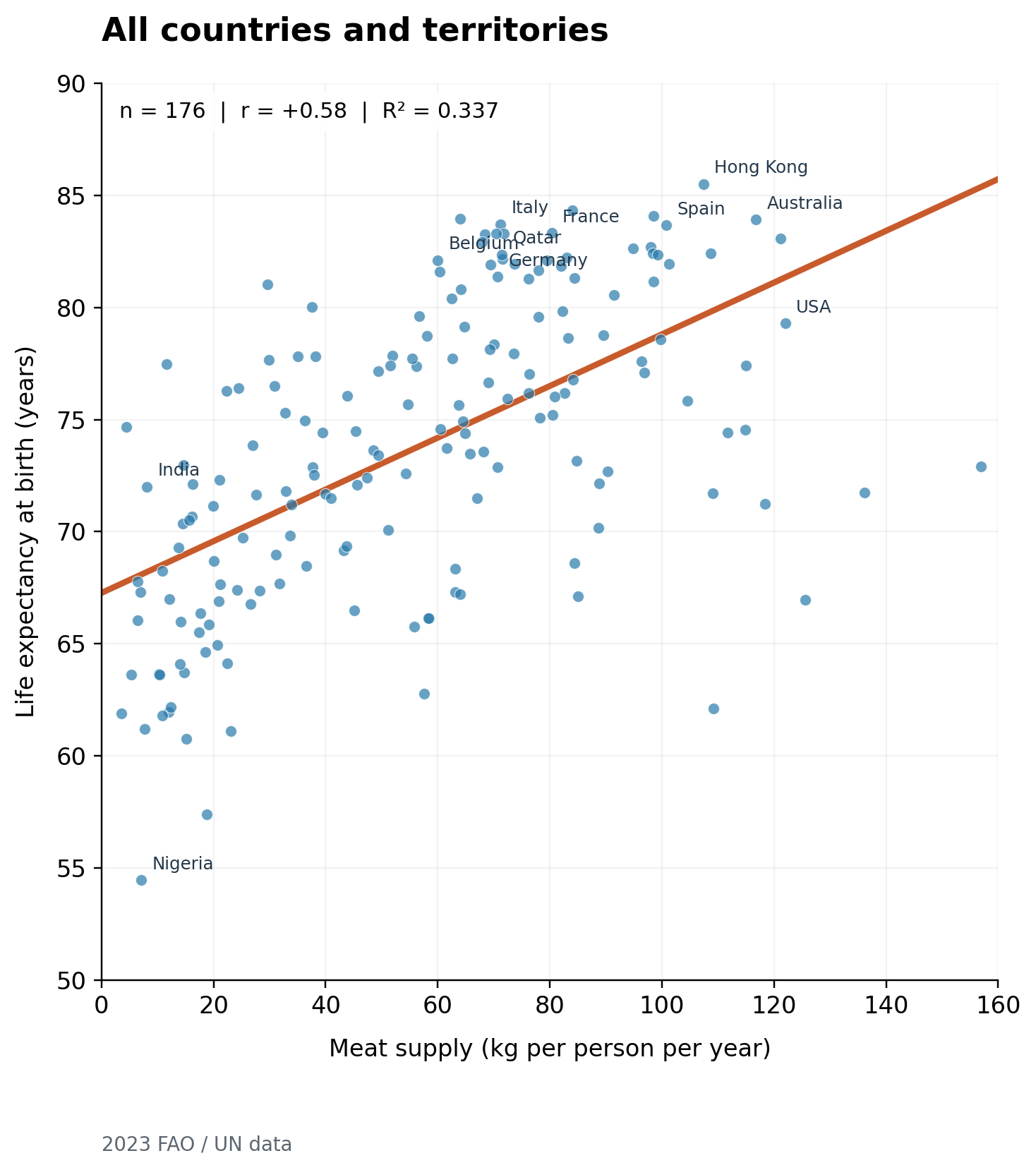
France, Spain, Italy, Belgium, Germany, Australia, Israel, and Hong Kong all combine substantial meat consumption with relatively long life expectancy. France exceeds 83 years, while Spain, Italy, and Australia approach 84. These populations consume meat alongside varying quantities of fish, dairy, eggs, vegetables, and grains.
Rather than selecting a handful of favorable examples, we compared 2023 data from the United Nations and the Food and Agriculture Organization across 176 countries and territories with matching records.
Worldwide, meat availability was positively correlated with life expectancy (r = 0.58). Countries with greater meat availability generally had longer life expectancies. But this relationship is heavily influenced by economic development. Wealthier countries tend to have greater access to animal foods, better sanitation, more developed healthcare systems, and lower mortality from infectious diseases.
The more revealing comparison came when we restricted the analysis to 61 high-income economies.
The correlation between meat availability and life expectancy virtually disappeared: r = −0.03.
Among these relatively prosperous populations, greater meat availability was associated with neither longer nor shorter life expectancy in any meaningful linear relationship. Meat availability explained approximately one-tenth of one percent of the variation in life expectancy.
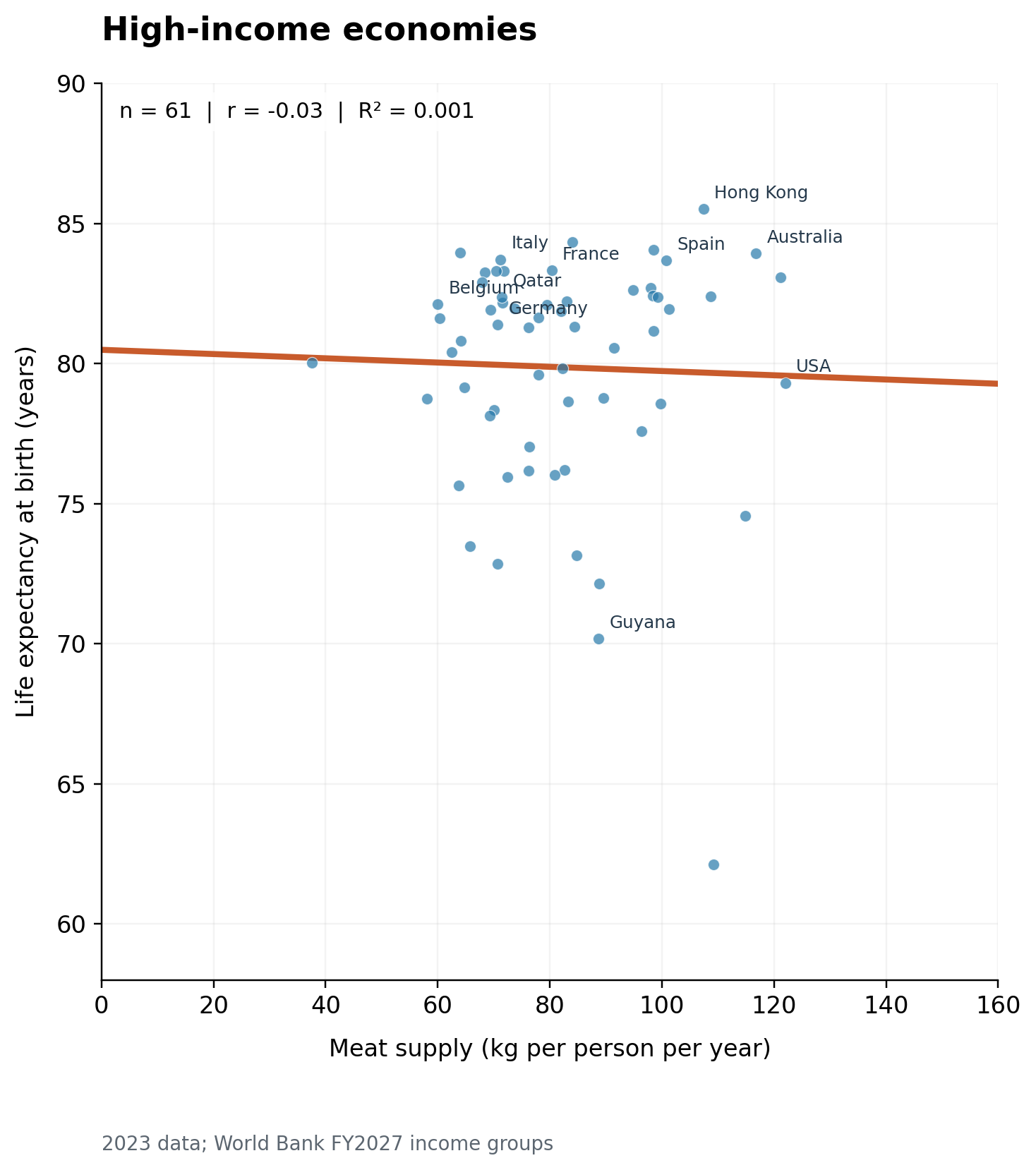
Confounding variables. Actual meat consumption statistics or surveys are not available. National food-supply statistics measure availability rather than individual consumption, exclude fish and dairy from the meat category, and cannot account for lifetime dietary habits. Life expectancy at birth is also influenced by mortality earlier in life, not simply the biology of aging.
But the finding is difficult to reconcile with the simplistic proposition that populations consuming less meat necessarily live longer.
At the opposite end of the economic spectrum, countries such as the Democratic Republic of Congo, Madagascar, Rwanda, and Ethiopia have very low meat availability and substantially shorter life expectancies. These comparisons are strongly confounded by poverty, infectious disease, inadequate healthcare, and nutritional deficiencies. They also cannot establish that eating more meat would extend life.
The same caution applies in reverse. Our international analysis does not demonstrate that meat improves longevity. It demonstrates something narrower but important: among high-income economies, there is essentially no linear relationship between national meat availability and life expectancy.
If avoiding meat were essential for exceptional longevity, we would expect a more consistent pattern.
The Adventist Studies: When Lifestyle Gets Confused With Diet
Some of the most influential evidence supporting vegetarian longevity comes from the Adventist Health Studies, which have followed Seventh-day Adventists for decades. These studies are often considered particularly valuable because the church discourages smoking and alcohol consumption.
But discouraging unhealthy behaviors does not mean those behaviors are equally distributed among vegetarians and meat eaters.
A 2024 analysis of Adventist Health Study-2 included 88,400 participants and 12,515 deaths. Among vegetarians, approximately 92 percent had never smoked. Among nonvegetarians, the figure was approximately 84 percent. Nonvegetarians were therefore more than twice as likely to have a history of smoking. Recent smoking or quitting within the previous five years was also substantially more common among nonvegetarians.
Alcohol consumption differed as well. Although drinking was uncommon throughout the study population, nonvegetarians reported considerably more alcohol consumption. The groups also differed in physical activity, body weight, education, and other characteristics associated with mortality.
These differences matter enormously. Smoking is an established cause of premature death. So are numerous conditions associated with obesity, physical inactivity, and excessive alcohol consumption. When people following different diets also lead different lifestyles, attributing mortality differences to meat consumption becomes scientifically difficult.
The researchers at Loma Linda University initially found that vegetarians who were 65 years old had a 26 percent lower risk of dying during the study period than meat eaters of the same age. That sounds like a substantial advantage for vegetarianism.
What the Headlines Don’t Tell You
But then the researchers took a closer look. They adjusted their calculations to account for the fact that vegetarians were less likely to smoke or drink alcohol, tended to exercise more, and differed in body weight, education, and other characteristics that influence health and longevity.
Once those differences were taken into account, the apparent vegetarian advantage dropped from 26 percent to just 12 percent. After also accounting for preexisting medical conditions, it fell to 11 percent.
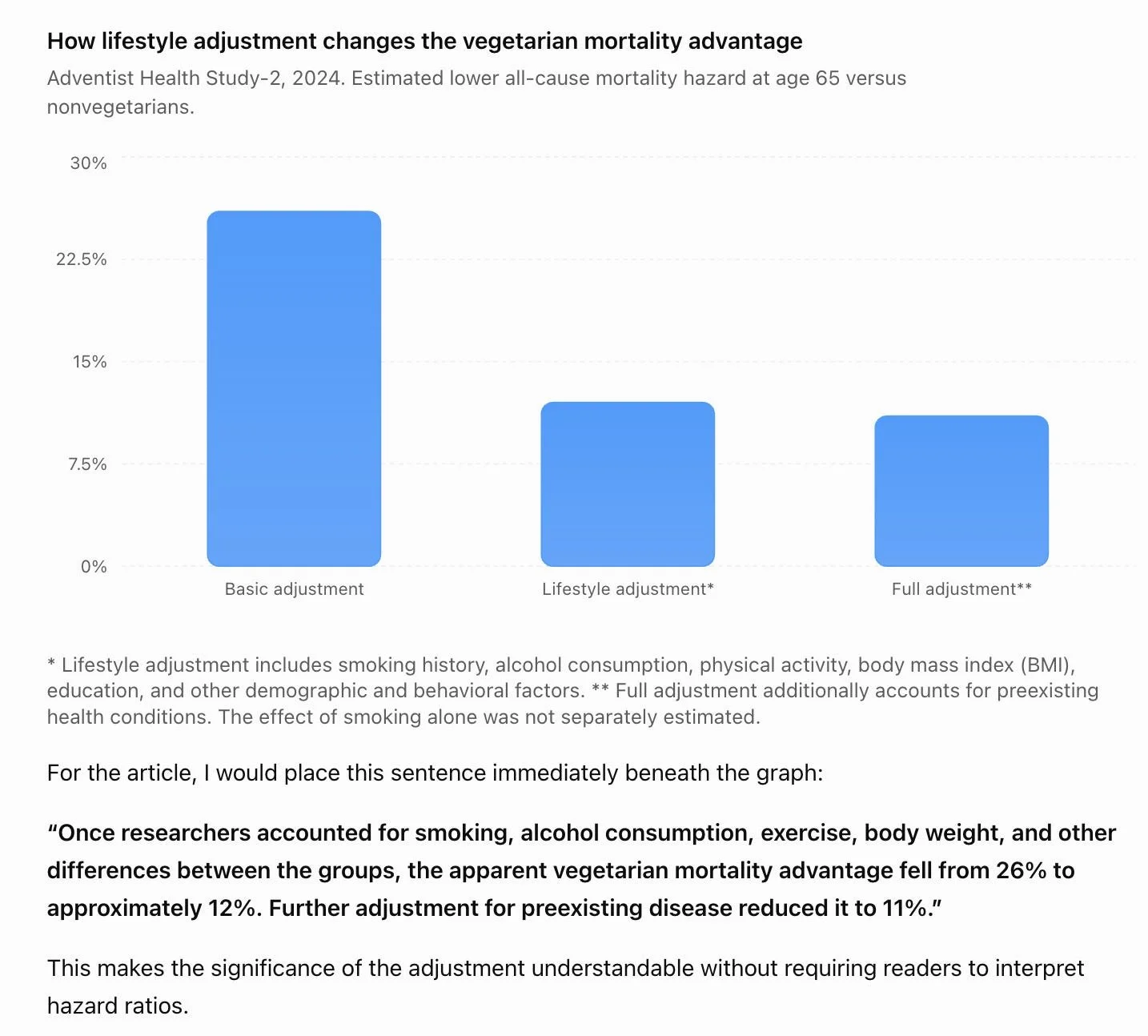
More than half the apparent vegetarian advantage disappeared after adjustments made by the Adventist researchers themselves. By age 85, vegetarians showed no statistically significant survival advantage, nor did vegans overall after adjustment for lifestyle differences.
But important confounding factors remained. The researchers did not directly account for church attendance, social support, or community involvement. These matter: a study of more than 74,000 women associated frequent religious attendance with a 33 percent lower mortality hazard. Differences in religious participation could therefore influence the Adventist findings independently of diet.
This illustrates a fundamental weakness of observational nutritional research. Statistical adjustments cannot eliminate every difference between people who choose different diets. Nor does an 11 percent lower mortality hazard mean someone will live 11 percent longer.
The Adventist study cannot establish how much of the remaining survival advantage comes from avoiding meat rather than the broader lifestyle of the people who avoid it. Yet such associations are routinely presented to the public as evidence that vegetarianism extends life.
Is Meat the Problem, or What We Eat With It?
There is another major complication: the modern industrial diet.
Consider the difference between grilled beef served with fresh vegetables and potatoes, and a fast-food hamburger accompanied by refined-flour bread, French fries, sweetened beverages, and manufactured sauces. Both meals contain beef. But their nutritional composition and the broader dietary patterns associated with them may differ considerably.
When researchers find that people who frequently consume hamburgers have poorer health outcomes, how much of that association is attributable to beef, how much to the accompanying foods, and how much to other characteristics of the people consuming them?
Ultra-processed foods account for approximately 58 percent of dietary calories in the United States, compared with substantially lower proportions in countries such as Italy. Yet both populations consume considerable quantities of animal foods, and Italians enjoy substantially longer life expectancy.
That comparison does not establish that ultra-processed foods explain the difference. But it demonstrates why focusing exclusively on meat can miss important characteristics of the overall diet.
A 2024 BMJ study followed more than 114,000 American healthcare professionals for up to 34 years. After adjustment, the highest ultra-processed-food consumption group had an estimated 4 percent higher all-cause mortality hazard than the lowest. The association weakened after accounting for overall dietary quality, and different categories of ultra-processed foods showed different relationships with mortality.
The distinctions matter. Fresh beef is not nutritionally identical to processed luncheon meat. Fermented yogurt and traditional cheese should not be confused with industrially formulated snack foods. Nor is an ultra-processed plant-based burger necessarily nutritionally equivalent to beans, lentils, or vegetables.
What replaces meat is also critical. Replacing processed meat with legumes and whole grains is a different intervention from replacing freshly prepared beef with refined carbohydrates and industrial meat substitutes.
EAT-Lancet itself recommends minimally processed plant foods, not a diet built around ultra-processed substitutes. But that does not resolve the larger scientific question: when a healthier overall dietary pattern is associated with better outcomes, which changes are responsible?
Researchers cannot automatically attribute the benefits of eating more nutritious plant foods to the elimination of meat.
Age introduces another complication that broad dietary recommendations often overlook. A 2014 study published in Cell Metabolism found that higher protein intake was associated with lower mortality among those over 65. An Italian study following older adults for up to 20 years subsequently found that higher animal-protein intake was associated with lower overall and cardiovascular mortality, while plant protein showed no significant mortality association. These observational findings do not prove that eating more meat extends life, but they challenge the narrative that reducing animal-protein intake is beneficial. For older adults facing muscle loss, frailty, and declining nutritional intake, that distinction may be particularly important.
EAT-Lancet: When Dietary Theory Becomes Global Policy
This brings us back to Walter Willett and the EAT-Lancet Commission’s extraordinary prediction that changing the world’s diet could prevent 15 million premature deaths every year.
The estimate comes from epidemiological associations, dietary risk models, and extrapolations across populations. It is not the observed result of a global clinical intervention demonstrating that the proposed diet extends human life.
That distinction is central to the entire debate.
The Commission argues that its recommendations draw on multiple forms of evidence, including observational research, shorter dietary trials, and biological mechanisms. But predicting mortality benefits for billions of people requires assumptions about causation, replacement foods, nutritional adequacy, and the applicability of research conducted in one population to entirely different societies.
A wealthy American professional, a European retiree, and a rural African family do not have interchangeable nutritional circumstances.
Nor does the Commission’s projected mortality benefit isolate the effects of reducing meat. Its proposed dietary transformation also involves increasing consumption of whole grains, legumes, nuts, fruits, and vegetables. Even if the overall pattern improves health, that does not demonstrate that restricting unprocessed red meat produces the benefit.
The Commission’s modeling has faced substantive scientific criticism.
In 2020, Francisco Zagmutt and colleagues challenged the original EAT-Lancet mortality estimates in The Journal of Nutrition, raising questions about reproducibility, statistical uncertainty, and the assumptions underlying the calculations. Their analysis suggested that some projected benefits might be explained by changes in energy balance rather than the specific dietary composition being promoted.
The 2025 Commission introduced updated methods, so the earlier critique does not automatically invalidate its newer estimates. Nevertheless, the dispute continued in February 2026, when Zagmutt, Gordon Guyatt, Andrew Mente, Ty Beal, and colleagues published further criticism in The Lancet, followed by a response from the commissioners.
These are substantive disagreements about evidence and methodology. They deserve far more public attention than another celebrity-style interview about what a Harvard nutrition professor eats for breakfast.
The Climate Agenda Behind the Diet
The EAT-Lancet Commission is not simply promoting healthier eating. It is advancing a climate agenda through nutritional policy. Its 2025 report attributes approximately 30 percent of global greenhouse gas emissions to food systems and warns that even eliminating fossil fuel emissions may not meet climate targets without transforming agriculture. Cattle, because of methane emissions, are a prominent target.
The Commission advocates dramatic reductions in red-meat consumption while claiming that worldwide adoption of its proposed diet could prevent 15 million premature deaths annually. There is no direct clinical evidence demonstrating that this dietary transformation would save 15 million lives, or that restricting red meat would independently extend human lifespan. The figure is a statistical projection built on observational associations, assumptions about causation, and extrapolations across vastly different populations. Yet this speculative mortality estimate is being promoted alongside an explicit climate agenda to justify changes in global food production and consumption. A modeled prediction is not a demonstrated medical benefit, regardless of how prestigious the institutions promoting it may be.
Combining these claims gives environmental objectives the additional authority of a public-health imperative, even though the promised longevity benefits remain unproven.
This agenda is already moving from academic journals into public policy. The C40 Good Food Cities initiative explicitly promotes the EAT-Lancet Planetary Health Diet, with commitments to change food purchasing for schools, hospitals, and other public institutions. Its original 14 signatory cities collectively served approximately 500 million meals annually. WHO environmental-health guidance encourages reducing certain animal foods and incorporating climate objectives into national dietary guidelines and public procurement. Denmark has adopted climate-oriented dietary guidelines and a livestock emissions tax scheduled to begin in 2030.
These policies have consequences for farmers, rural communities, food affordability, and individual choice. Animal foods provide high-quality protein and essential nutrients, and in many poorer countries greater access to them remains an important public-health priority. Yet international dietary prescriptions risk treating vastly different populations and nutritional needs as though one global formula could serve everyone.
The EAT-Lancet Commission is not merely an independent group of scientists publishing research. It is a powerful scientific and policy interest group, involving Harvard and other prestigious institutions, with an explicit objective of transforming global food production and consumption. Its recommendations carry the authority of The Lancet, one of the world’s most influential medical journals, while its institutional partners work to translate those recommendations into public policy.
This raises serious questions about the boundary between scientific research and organized policy advocacy. Peer-reviewed publication does not establish that modeled mortality projections are clinical facts, nor does it confer an ethical mandate to reshape agricultural systems and dietary choices worldwide. When the same scientific network develops dietary recommendations, promotes their projected health benefits, and advocates their adoption by governments, the distinction between independent scientific assessment and institutional advocacy becomes critically important.
I previously examined the questionable longevity narratives surrounding the Blue Zones in Blue Zone BS. EAT-Lancet raises a more consequential bioethical concern: uncertain nutritional claims are being combined with climate objectives to justify sweeping changes in how the world produces and consumes food. Not every national or WHO policy originates with EAT-Lancet, but its recommendations are part of a broader movement to use dietary policy as an instrument of climate policy.
Scientists are entitled to advocate public policy, but their advocacy must be distinguished from established scientific evidence. When uncertain claims about human longevity are used to lend medical authority to environmental objectives, scientific prestige becomes an instrument of political persuasion rather than independent inquiry.
The central issue is scientific integrity and public accountability. A prestigious journal, influential academic institutions, and powerful philanthropic supporters do not transform statistical predictions into demonstrated health benefits. Nor should they provide a shortcut around the scientific scrutiny and public debate required before policies affecting farmers, food security, and the dietary choices of billions of people are implemented.
Conclusion: India versus Hong Kong
Hong Kong presents an inconvenient fact for those claiming that eating less meat is essential for longevity. Its annual meat supply exceeds 107 kilograms per person, excluding fish, dairy, and other animal foods - probably the highest in the world. Yet its life expectancy reached approximately 85.5 years in 2023, making it among the highest, if not the highest, in the world.
This is not a selectively identified community of centenarians with questionable historical records. It is a modern population with reliable demographic statistics, substantial meat consumption, and exceptional longevity. France, Spain, Italy, Australia, and Israel offer further examples.
India provides a striking contrast. Approximately 39 percent of Indian adults identify as vegetarian, and 81 percent restrict meat consumption in some form. Yet life expectancy is approximately 72 years, compared with 85.5 years in meat-consuming Hong Kong. Differences in wealth, healthcare, and living conditions complicate the comparison, but India’s widespread vegetarianism has clearly not translated into exceptional national longevity.
More importantly, our analysis of 61 high-income economies found essentially no correlation between meat availability and life expectancy (r = −0.03). The Adventist research tells a similar cautionary story: much of the apparent vegetarian mortality advantage disappeared after adjusting for lifestyle differences, while the fully adjusted vegan comparison showed no statistically significant survival advantage.
None of this proves that eating more meat extends life. But neither does the evidence establish that avoiding it does. And that distinction matters when international organizations promote dietary restrictions as a strategy for improving longevity.
Walter Willett can eat whatever he wishes. So can everyone else. But the EAT-Lancet Commission wants to influence how billions of people eat, combining uncertain mortality projections with an explicit climate agenda that could reshape agriculture, food prices, and rural livelihoods.
Hong Kong demonstrates that substantial meat consumption and exceptional longevity can coexist. Our international analysis found no meaningful relationship between meat availability and lifespan among wealthy nations. So where is the convincing evidence that restricting meat will make people live longer?
The purpose of public health is to protect human health, not to dictate how people live, what they eat, or how farmers produce food in service of an environmental agenda. Scientists and international commissions have every right to offer evidence and recommendations. They have no inherent authority to impose their dietary preferences on billions of people. These are individual choices, not decisions for unelected institutions to make. The world’s food supply does not belong to EAT-Lancet, the WHO, or any other international commission. Neither do our lives.